
Can You Build a Swimming Pool Over an Easement?

An easement can prevent you from building a swimming pool, pool decking, equipment, retaining walls, or other improvements in part of your backyard.

Whether an easement actually affects your pool depends on where the easement is located, what type of easement it is, what you want to build, and which entity has rights to that area of the property.

That is why one of the first things a pool designer should review is not the tile selection or the shape of the pool.

It is the property survey.

At Texas Pools, we have been designing and building swimming pools throughout the Greater Houston area since 1980. One issue we regularly have to account for during planning and permitting is whether an otherwise attractive pool location conflicts with an easement, building line, drainage area, utility, septic system, or another property restriction.

Finding those restrictions before the final pool design is completed can save a homeowner from having to redesign the project later.
What Is an Easement?

An easement is a legal right that allows another person, utility company, government entity, homeowners association, or other party to use or access a defined portion of privately owned property for a particular purpose.

The homeowner still owns the property.

However, the easement may limit what can be constructed within that part of the property because the party holding the easement may need continued access to it.

For a homeowner planning a swimming pool, the important question is therefore not simply:

“Do I have an easement?”

It is:

“Does the easement interfere with where we want to place the pool or other improvements?”

Where Do You Find Easements on Your Property?

One of the best places to start is your property survey.

A survey typically shows the property boundaries along with important features or restrictions that have been identified on the property.

For pool planning, the survey should be reviewed for items such as:

  • Easements
  • Building lines or setbacks
  • Existing structures
  • Utilities
  • Drainage conditions
  • Rights-of-way
  • Septic systems, when applicable
  • Other recorded property restrictions

Your pool builder uses that information to determine how much of the backyard is realistically available for the pool, decking, equipment, and other improvements.

This is one of the reasons Texas Pools evaluates site conditions during the early stages of planning rather than waiting until permitting begins. Our Custom Pool Planning Guide similarly identifies utilities, drainage, access, HOA requirements, and other site opportunities and challenges as part of the initial property evaluation.

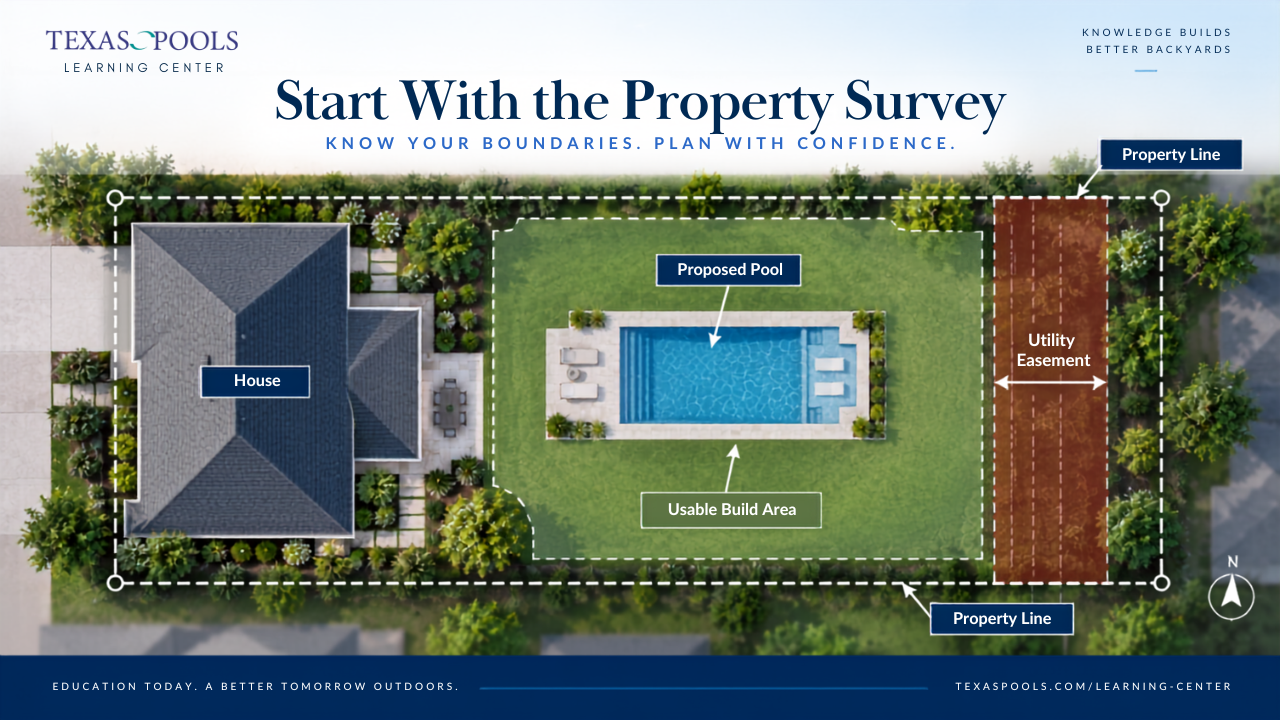
Property survey showing utility easement, property lines, proposed pool, and usable build area

What Types of Easements Can Affect a Swimming Pool?

Not every easement serves the same purpose.

The exact restrictions depend on the property and the documents creating the easement, but several types are especially important during swimming pool planning.

Can a Utility Easement Affect Pool Placement?

Yes.

A utility easement may be reserved for electrical, gas, water, sewer, telecommunications, or other utility infrastructure.

If underground or overhead utilities are located within or near the proposed pool area, the pool design may need to change.

The concern extends beyond the gunite shell itself.

Depending on the property and the applicable restrictions, a utility easement can potentially affect the placement of:

  • The swimming pool
  • Spa
  • Pool decking
  • Equipment pad
  • Retaining walls
  • Outdoor structures
  • Landscaping or other permanent improvements

A beautiful pool design does not help the homeowner if the project cannot ultimately be approved or constructed in the proposed location.

Can a Drainage Easement Affect a Swimming Pool?

Yes.

A drainage easement is particularly important in the Houston area because drainage is already a major consideration on many properties.

A pool, deck, retaining wall, or other improvement cannot simply be designed without considering how stormwater currently moves across the property.

The permitting article we just completed addresses this directly: pool reviews in our market can involve both easements and drainage routes, and those property conditions can require design changes or additional review.

Blocking or significantly altering an established drainage path can create problems not only for permitting but also for the homeowner and surrounding properties.

That is why drainage and pool placement should be considered together.

Does an Easement Mean You Cannot Build a Pool at All?

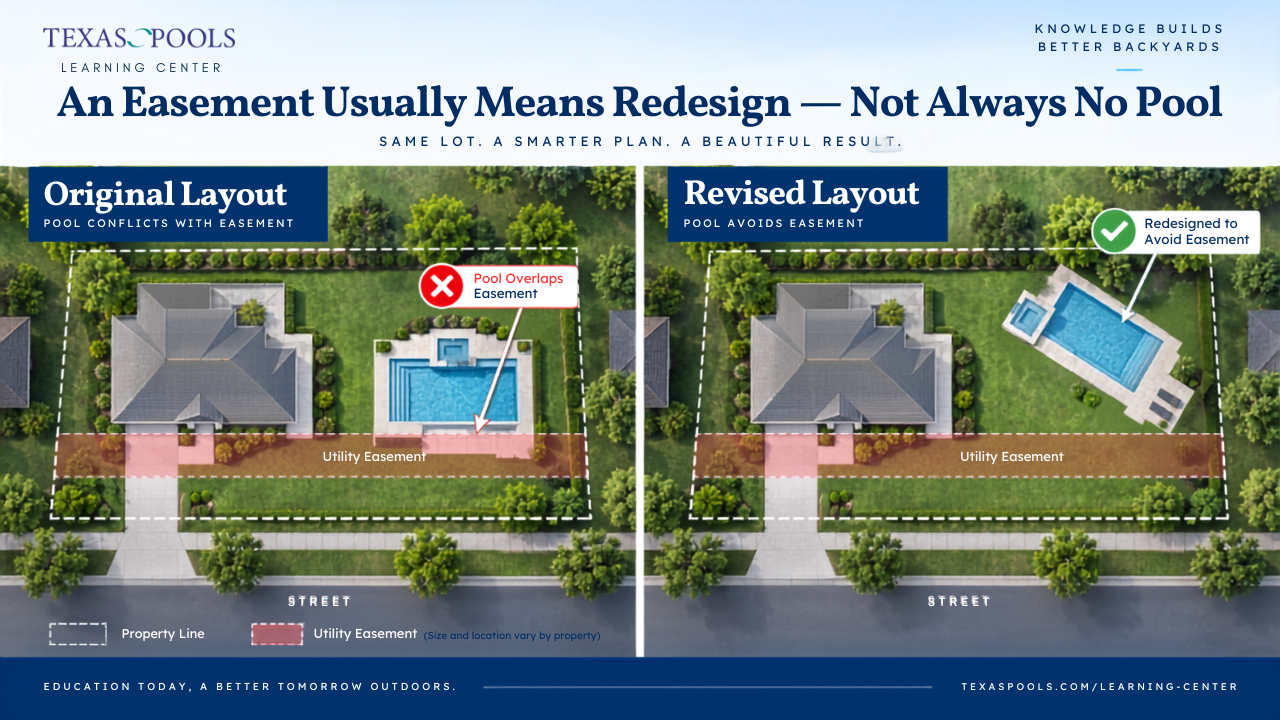
Usually, an easement does not automatically mean the entire property is unsuitable for a swimming pool.

What it may mean is that the usable building area is smaller than the backyard appears to be.

Imagine a homeowner looking at a large open backyard and assuming almost all of it is available for the pool.

The property survey may tell a different story.

Once easements, building lines, drainage requirements, existing structures, utilities, and required clearances are considered, the actual area available for construction may be considerably smaller.

A pool designer may then need to:

  • Move the pool
  • Rotate the pool
  • Reduce part of the pool
  • Change the deck layout
  • Relocate equipment
  • Modify an outdoor living feature
  • Reconsider a retaining wall
  • Redesign the overall backyard plan

That does not necessarily mean settling for a poor design.

It means designing the project around the property that actually exists rather than the open space that appears to exist.

Property survey illustration showing a proposed swimming pool, property lines, utility easement, and usable build area

Can You Get Permission to Build Inside an Easement?

Sometimes homeowners ask whether an easement can simply be waived or whether someone can give permission to build within it.

The answer is property-specific.

The rights associated with an easement can depend on the recorded documents, easement holder, utility provider, governing jurisdiction, HOA or Township requirements, and the type of improvement being proposed.

A homeowner should therefore not assume that an easement can be removed, reduced, relocated, or built within.

If a proposed swimming pool conflicts with an easement, the applicable easement holder and reviewing authorities should be identified before the design moves forward.

In some situations, the practical answer may be to redesign the pool instead of trying to change the property restriction.

That may initially feel like a compromise, but it can be far better than designing an entire project around an approval that may never be granted.

What Happens If You Ignore an Easement When Designing a Pool?

This is where an easement can become expensive.

If the property survey is not reviewed carefully at the beginning, the homeowner may spend considerable time developing a pool design only to discover during HOA review, Township review, permitting, engineering, or utility review that part of the project conflicts with a property restriction.

Potential consequences can include:

  • Redesigning the pool
  • Reducing the size of the project
  • Moving decking or equipment
  • Revising engineering
  • Revising permit drawings
  • Reapplying for approvals
  • Delaying the start of construction

In our permitting article, we identified pool or decking encroaching into an easement as one of the issues that can delay approval in The Woodlands, while easement conflicts are also among the conditions that can complicate projects elsewhere in the Houston market.

The better approach is to identify the restriction while the design can still be changed easily.

Why Are Easements Especially Important in The Woodlands and Greater Houston?

Pool permitting and property restrictions in Greater Houston can become complicated because the organization reviewing the project is not always obvious from the homeowner’s mailing address.

A property may involve a city, county, Municipal Utility District, HOA, The Woodlands Township, or more than one reviewing entity.

For example, swimming pool projects in The Woodlands generally involve The Woodlands Township Covenant Administration along with applicable Harris County or Montgomery County requirements. Township review can include easements, setbacks, drainage, decking, pool equipment, landscaping, trees, and hard-surface coverage.

Spring, Magnolia, Conroe, Houston, and unincorporated portions of Montgomery County can each present different approval considerations as well.

That is why an easement question should not be answered only by looking at the city name in the mailing address.

The specific property and applicable jurisdiction matter.

What Should Your Pool Builder Review Before Designing Around an Easement?

Before a swimming pool design is finalized, the builder should understand as much as possible about the physical and legal constraints affecting the proposed construction area.

Important items can include:

Property Consideration Why It Matters
Easements May restrict pools or other improvements in part of the property
Building lines/setbacks Can limit how close improvements may be placed to property lines or structures
Utilities Can affect excavation, pool location, equipment placement, and access
Drainage May influence elevations, decking, grading, and retaining structures
Existing structures Reduce or shape the available construction area
Septic systems Can significantly affect usable space on applicable properties
HOA/Township restrictions May impose additional design or placement requirements
Floodplain conditions May require additional review, engineering, or elevation information

A good pool layout is not simply a pool that fits between two fences on a drawing.

A good pool layout works with the entire property.

When Should Easements Be Reviewed?

Before the final pool layout is developed.

This is the part homeowners should remember.

Do not wait until the permitting department discovers an easement conflict after the design has been completed.

At Texas Pools, our permitting process starts with understanding the property itself. Our team reviews surveys and property conditions because easements, drainage, utilities, building lines, floodplain considerations, septic systems, and other restrictions can influence what can ultimately be approved and built.

The earlier those conditions are identified, the more freedom the designer has to create a solution around them.

Texas Pools Takeaway

An easement does not necessarily mean you cannot build a swimming pool, but it can significantly affect where the pool, decking, equipment, retaining walls, and other improvements can be placed.

The most important step is to review the property survey and identify easements, utilities, drainage conditions, building lines, and other restrictions before the pool design is finalized.

Designing around a known property restriction is usually much easier than redesigning a pool after an HOA, Township, utility provider, county, or permitting authority identifies the problem.

The backyard may tell you where you want to build the pool.

The survey helps tell you where you actually can.

Frequently Asked Questions About Pools and Easements

Potentially, but homeowners should not assume decking is allowed simply because it is not part of the pool shell. Easement restrictions can apply to decking and other improvements as well. The applicable easement documents and reviewing authority should be checked before the design is finalized.

Pool equipment can also be affected by easements. Equipment placement should be reviewed along with the pool, decking, utilities, access, setbacks, and applicable local requirements.

Start with your property survey. Easements may be shown on the survey, but additional recorded documents may sometimes need to be reviewed to understand the easement and the rights associated with it.

A pool builder cannot simply decide to move or remove an easement. Any modification would depend on the easement itself and the parties or authorities holding rights to it. In many cases, redesigning the pool may be the more practical solution.

Yes. An easement conflict can require design changes, additional documentation, approval from another entity, or a revised permit submission. Identifying easements before the plans are submitted can help reduce avoidable delays.

If a current survey is available, it can be extremely useful during early pool planning because it gives the designer a much better understanding of the property’s boundaries and potential restrictions.

Related Texas Pools Learning Center Articles

  • How Long Does It Take to Get a Pool Permit in Houston, The Woodlands, Spring, Magnolia, and Conroe?